
December 17th, 2025
Founded in 2018 in Berlin, drip by drip has positioned themselves as the first organisation dedicated to addressing the water consumption and wastewater problem within the textile industry.
Their mission is succinctly captured by its slogan: “Water first. Fashion second.”

The fashion industry is a major water consumer and polluter, communities in textile-producing countries often bear the consequences of water stress or contamination.
drip by drip’s work highlights transparency and governance. Aiming to combat the imbalance of resources within the industry and to create a water-just fashion system for people and nature.
drip by drip has a publicly accessible Code of Conduct which sets out a comprehensive set of principles including respect for local culture, equity and inclusivity, transparency and accountability, environmental responsibility, ethical partnerships, decoloniality in practice, data privacy, impact assessment and compliance with local and international laws and regulations.
They explicitly recognise “decoloniality in practice” (i.e., recognising the historical and ongoing legacies of colonialism and power imbalance in global development). Signalling a progressive awareness of how development organisations must act responsibly in global contexts.
In terms of programmatic action, they divide its work into three major pillars:
Inform
Inform focuses on education and awareness-raising: school and university workshops in fashion and textile contexts, creation of the “Water Playbook” online tool for consumers and brands and events or round tables bringing together different stakeholders.
Restore
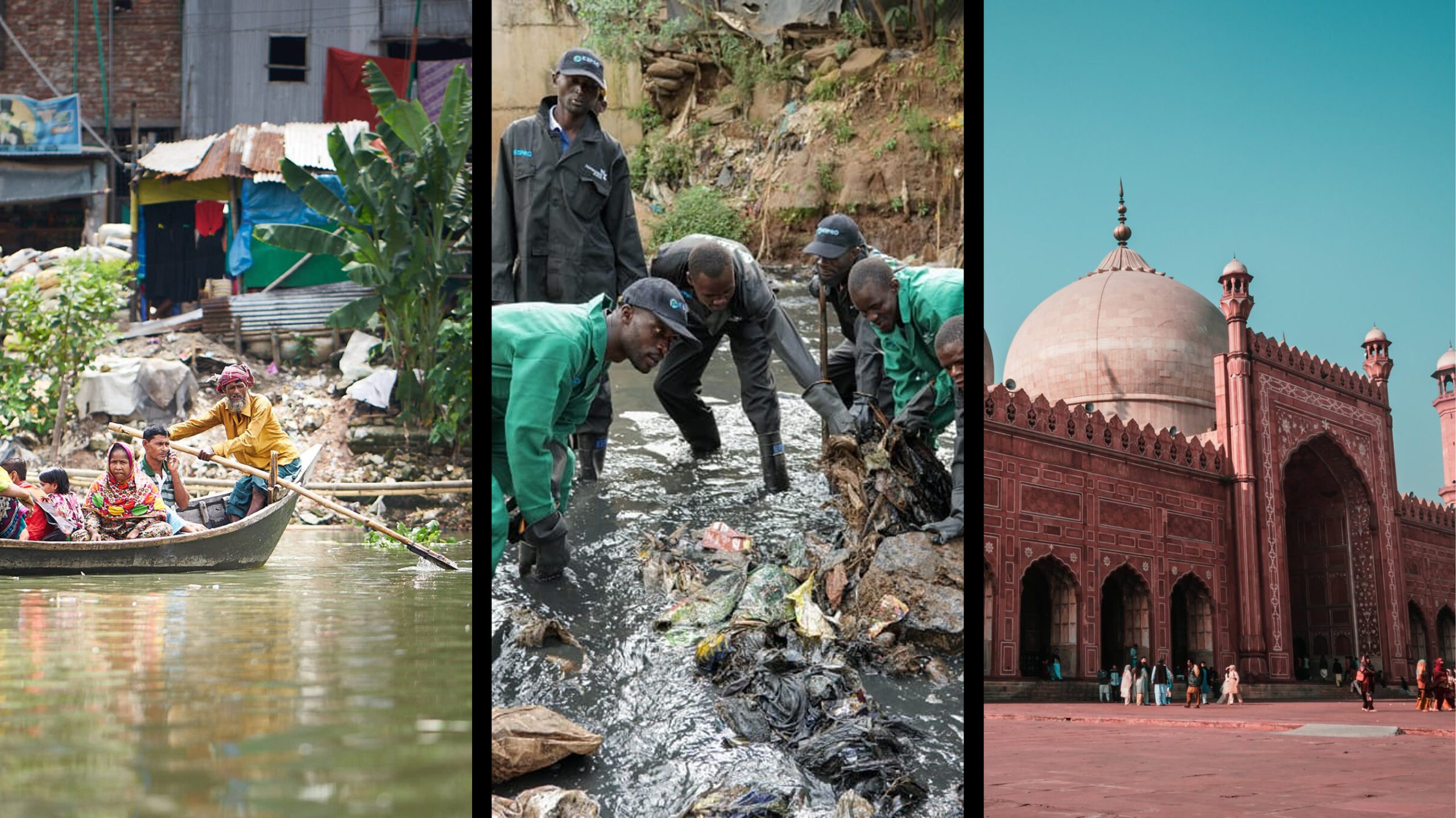
The Restore pillar undertakes on-the-ground community water, WASH (Water, Sanitation, Hygiene), MHM (Menstrual Hygiene Management) and mobile healthcare projects in countries such as Bangladesh, Pakistan, India and Ethiopia.
Connect
Connect aims at linking brands, water resource experts, textile suppliers and local communities, thereby influencing corporate sustainability practices in the broader supply chain.
Some examples of their impact
As part of its corporate partner work, drip by drip cites that through “114 community projects” they have reached more than 280,000 people with access to clean water in the Global South.
In other cases, they describe specific projects: one project in Bangladesh involved installing 33 water solutions (deep tube wells, biosand filters) in 30 communities around Dhaka, benefitting 14,320 people with guaranteed access to clean and safe drinking water for at least 10 years.
In Pakistan, a school-based WASH project for a textile brand provided solar-powered water filters, hand-wash and toilet facilities, hygiene and gardening training at a public school, benefiting over 1,100 students, teachers and community managers.
Education
This organisation’s educational initiatives link fashion consumption in the Global North to water impacts in production countries. For example, their “Women for Water” campaign emphasised how women in textile-producing regions are disproportionately affected by polluted water and poor sanitation, while women in consumer countries may be unaware how their consumption behaviour contributes to the problem.
By drawing these links, they emphasise systemic responsibility rather than merely charitable aid.
Funding and partnerships
The organisation provides data from a variety of funding sources
By providing data on large donors and funding sources, among its disclosed funding for 2024 were public funders, such as Engagement Global gGmbH (via the German Federal Ministry for Economic Cooperation and Development). As well as Berlin’s office for Development Cooperation. In addition to corporate donations, including Beechfield Brands Ltd, Momox SE, Stanley & Stella SA.
The public listing of such funding sources is another indicator of responsible organisational practice.
Beyond transparency, their internal operations reflect ethical standards: drip by drip states that only volunteers work unpaid, while other employees, including permanent part-time staff, interns and working students, are employed under social-insurance and paid above minimum wage.
This internal ethical practice reinforces their credibility.
In summary, this brand demonstrates responsible action through multiple dimensions: a transparent governance and funding model, a clear ethical code emphasising equity and decolonial awareness, a multi-pronged programme of education, restoration and supply-chain alignment, measurable community outcomes in affected regions and efforts to link consumer behaviour with production-side impacts. These are exactly the markers one would look for in a non-profit organisation aiming for systemic change rather than superficial interventions.
Created by Jessica Marwood, written by Robert Williams.
DISCLAIMER: We endeavour to always credit the correct original source of every image, however if you think a credit may be incorrect, please contact us at rb@hatchedlondon.com.


