November 12th, 2025
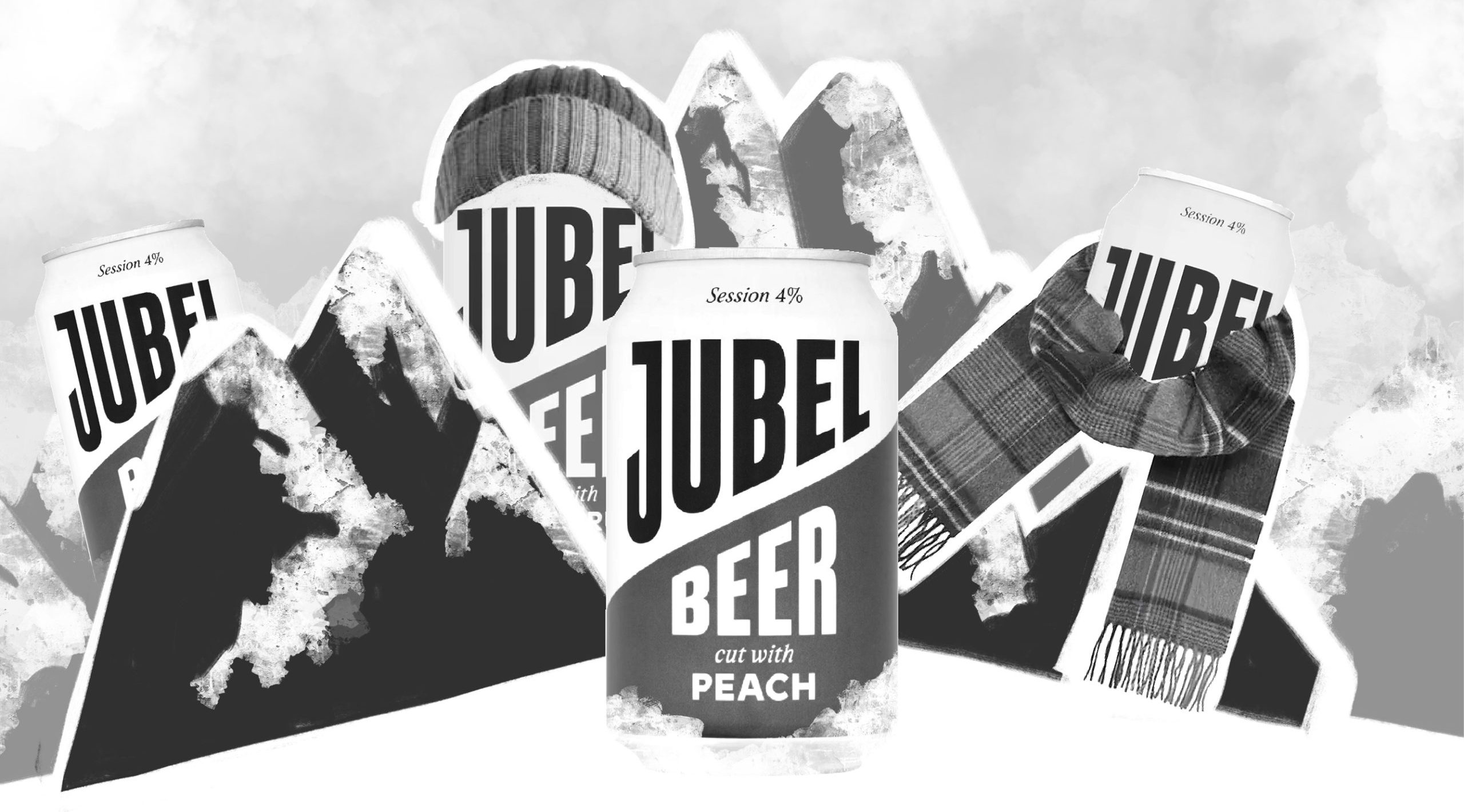
From the beginning, JUBEL has positioned responsibility as a central pillar of its identity. This fun and energetic brand was built from an alpine moment that inspired its founders to build a company that is “people and planet positive.” They strive to set out to sell beer and leave no trace. Guarding the landscapes and communities that inspire them.

This ecological ambition is matched by a commitment to social values. In 2022, JUBEL achieved Certified B Corp status, holding themselves accountable to standards that extend beyond profit to purpose.
At the heart of JUBEL’s approach is a three-step framework for its environmental work:
- Measure
- Reduce
- Remove.
JUBEL works with Zevero, a carbon accounting platform that helps companies measure, analyse and reduce their environmental impact. Through Zevero, JUBEL calculates its full carbon footprint according to the internationally recognised Greenhouse Gas (GHG) Protocol Corporate Standard, dividing emissions into three scopes.
Scope 1 – Direct Emissions
JUBEL partners with external contract breweries rather than running its own production sites, so the company’s Scope 1 emissions are very low.
Scope 2 – Indirect Energy Emissions
Scope 2 covers emissions from purchased energy. This scope covers only a small fraction of JUBEL’s overall footprint because third-party facilities handle the company’s main brewing and packaging activities and track their own energy use.
Scope 3 – Indirect Value Chain Emissions
Now, this is the largest and most significant category for JUBEL. Scope 3 includes all other indirect emissions that occur in the value chain. Between suppliers and distribution, product use and end-of-life disposal.
Zevero enables JUBEL to measure these scopes consistently, accurately and annually, giving a clear picture of where emissions originate. With this data, JUBEL can set meaningful reduction targets. Such as its goal to cut carbon intensity by 6% per year. As well as identifying hotspots (like packaging or raw materials) where changes have the biggest effect.
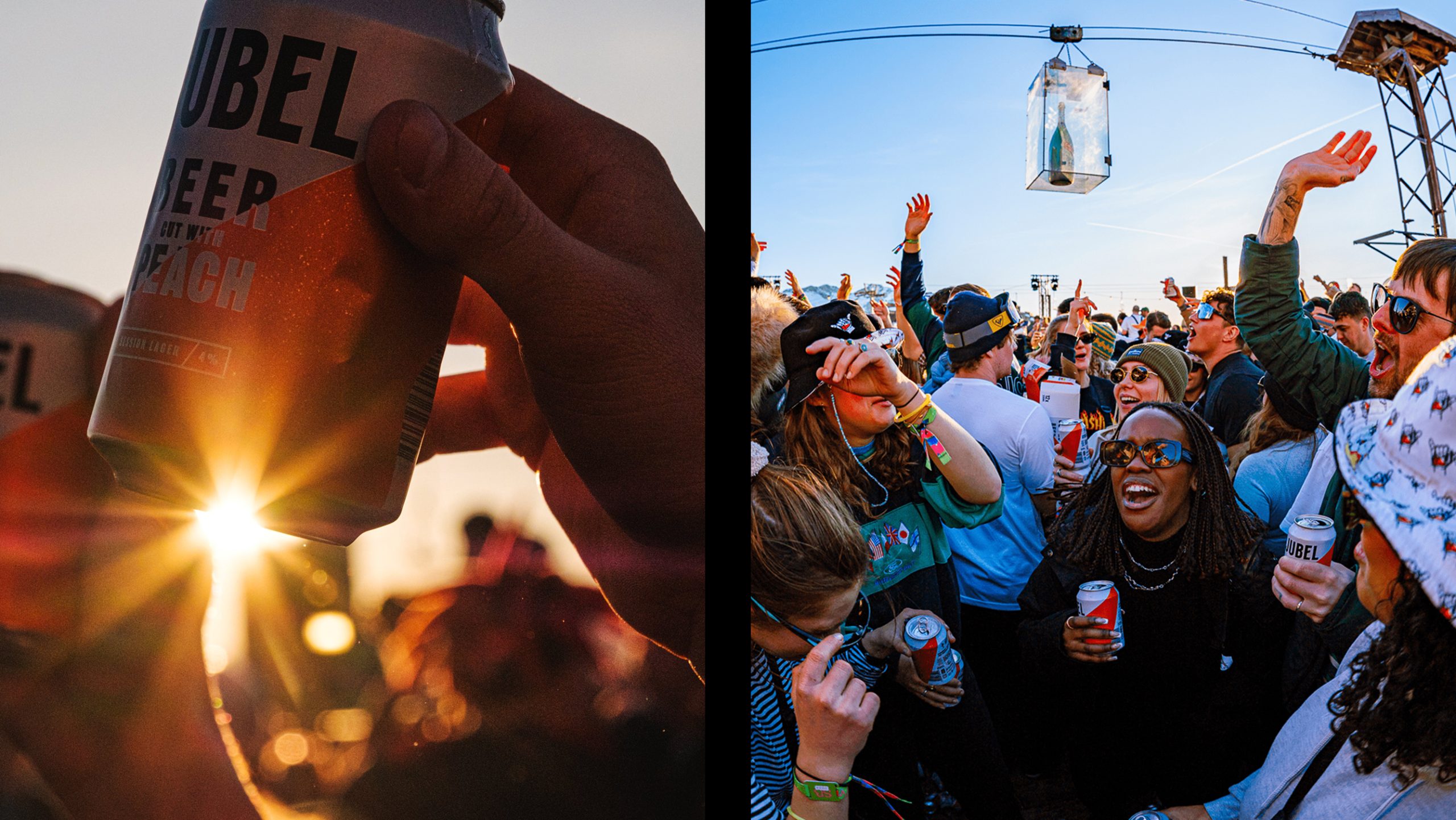
Because JUBEL has grown rapidly, its total carbon emissions have also expanded. The company tracks carbon intensity (i.e. emissions per litre of beer) as a key metric. For instance, while total emissions climbed by 80% from fiscal year 2024 to 2025, that growth accompanied a 94% increase in volume, resulting in a reduction in carbon intensity from 0.98kg COe/litre to 0.8 kg CO₂e/litre. The company has set a target of reducing carbon intensity by 6% per year.
In order to enact their “Reduce” phase in response to this company growth, JUBEL has adopted multiple strategies across the supply chain and packaging systems.
Packaging
Recognising that packaging is one of the larger contributors to emissions, they switched from glass bottles to aluminium cans in 2021. This move has saved over 340 tCO₂e to date. Cans are lighter, more compact, infinitely recyclable and enable more efficient pallet and transport configurations.
JUBEL sources all of its cardboard packaging from FSC-certified forests, ensuring responsible forest management. Their keg caps are made from 100% recycled plastic and efforts are underway to sharpen efficiencies in packaging runs to reduce wastage by scaling volumes.
Products
Raw materials, particularly malt and brewing syrup, are flagged as high-emissions areas. To tackle this, JUBEL works with suppliers that have their own emissions reduction plans and is forging partnerships with regenerative agriculture projects. Among these is their supply of Wildfarmed malted barley. Grown under independently audited regenerative standards, these farms deliver measurable gains such as improved biodiversity, 80% lower carbon emissions compared to conventional barley, zero pesticide use and a fully traceable supply chain.
Process
Contract breweries handle the brewing, reducing the need for underutilised, capital-intensive facilities while making better use of existing capacity. Local farms collect the spent grains and reuse them as animal feed. On packaging lines, JUBEL packages in larger batches to dilute the fixed losses from cleaning and switching between batches.
In addition to all of these incredible efforts, JUBEL embraces a commitment to carbon removal. They treat offsets as an “environmental tax”, a penalty self-imposed to scale as the business grows.
Every year, the company pledges to offset 100% of its externally verified emissions via a diversified portfolio of removal projects, chosen in consultation with their offset partner. These include initiatives such as:
- Regenerative agriculture in India
- Reforestation in Nicaragua
- Agroforestry in Nepal
- Soil carbon projects across the UK and Ireland
And!
- Biochar production in Kenya and Thailand.
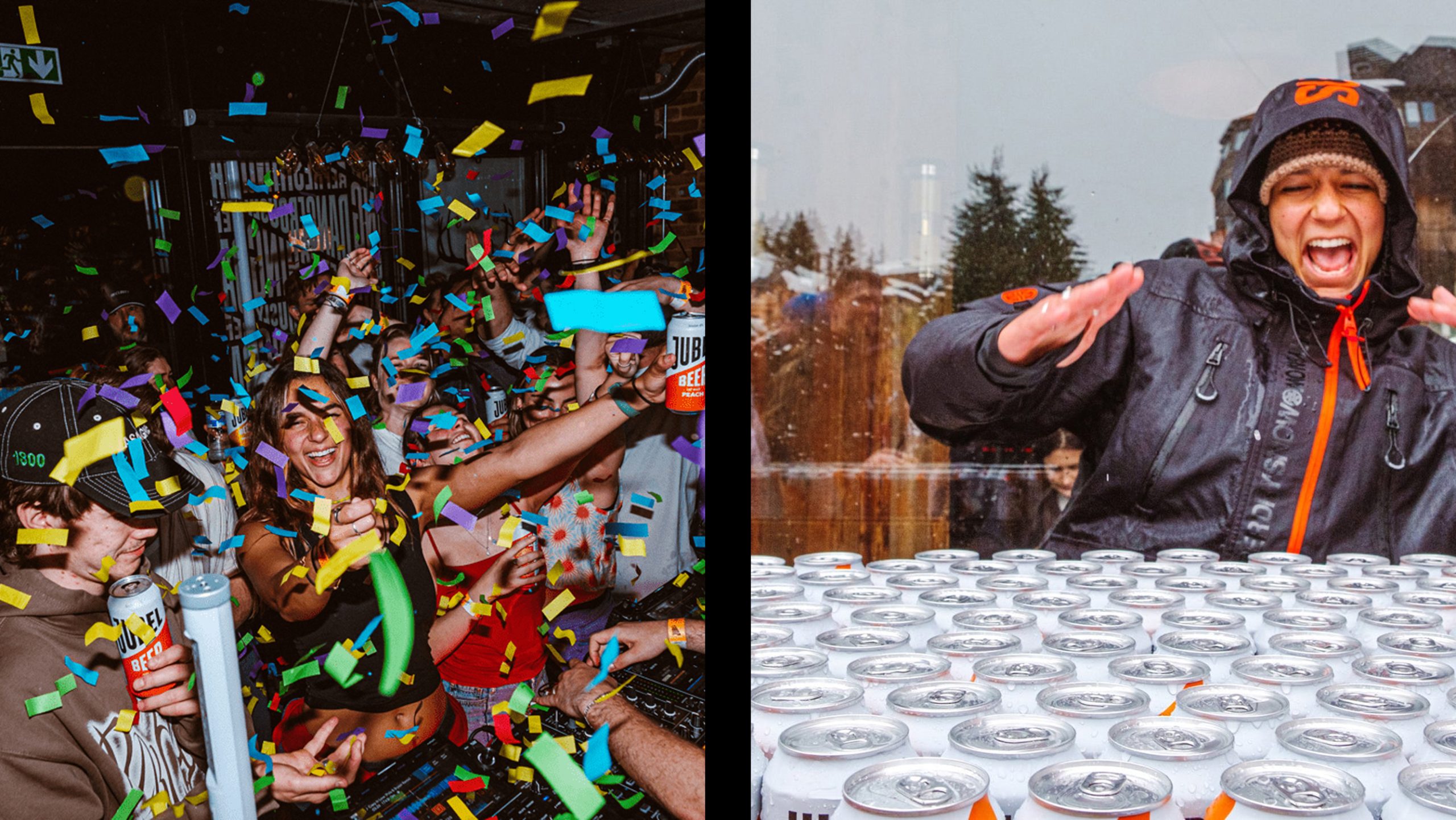
Among their internal community JUBEL aims to build a workplace where people are valued and energised. The company emphasises a “work hard/play hard” ethos, embedded in core values such as “Sustainable,” “Off-Piste,” “Action Oriented,” “Curious,” and “Thirsty.”
Employees receive benefits like private healthcare, sustainable pension offerings, quarterly team socials and a monthly wellbeing budget. The company also runs the “JAFTA” awards (Jubel Annual Flipping Talented Awards) to recognise employees who best exemplify each company value.
JUBEL’s leadership acknowledges that culture is essential. Founder Jesse Wilson has spoken of his own disenchantment with corporate life. Wilson resolved to cultivate a business where work felt more like a vocation. In that spirit, employees are entrusted with real responsibility, autonomy and ownership, fostering growth, purpose and enjoyment in their daily roles.
Overall, responsibility at JUBEL is a core operating principle. In their founding ethos, carbon accounting, packaging strategies, regenerative sourcing, carbon removal investments and people policies are all present. JUBEL ultimately seeks to balance commercial growth with deep environmental and social commitments.
Created by Jessica Marwood.
DISCLAIMER: We endeavour to always credit the correct original source of every image, however if you think a credit may be incorrect, please contact us at rb@hatchedlondon.com.


