January 10th, 2024
We’ve all thought about it, most of us try and do our bit to stop it, but food waste remains a serious problem. The UK alone wastes 9.5 million tonnes of food a year. From this simple fact alone, some serious issues immediately come to mind. Firstly, the impact this has on the environment, and secondly, the 1.7 million children in receipt of free school meals and the 274,000 homeless people in England. The 2-in-1 nature of food waste is just one reason why it evokes such emotion.
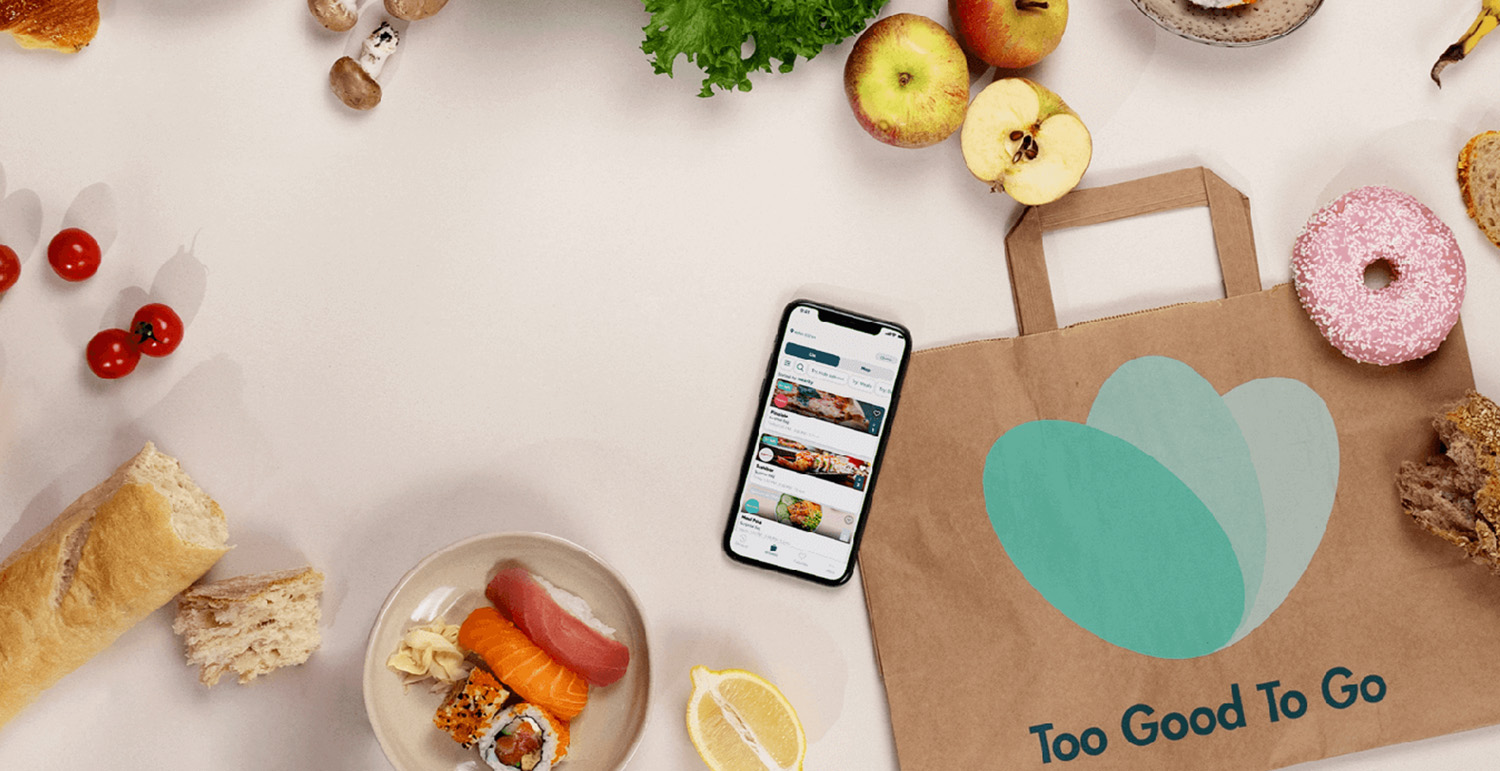
Enter, Too Good To Go (TGTG). They aren’t just finishing what’s on their plate, or in the fridge for that matter, they’re taking their mission across the world. Founded, 2015, in the dynamic metropolis of Copenhagen; at the Centre of the Øresund Region, TGTG is a social impact company working for a planet with no food waste. Their primary motive being to drive and distribute their food waste fighting app. Originally, the idea was to focus on food that became waste at the end of buffets but whilst developing this they quickly realised the concept could be extended to all sorts of food service providers. The app became, in a sense, like a digital buffet, where customers can choose what is provided when companies offer their surplus food on the app. Customers can scroll through, browse what’s on offer and then pre pay on the app, set up a time and collect the ‘magic bag’.
The crux of the TGTG project is the use of the ‘Magic Bag’ that a customer receives on arrival at the store of their choice. This allows restaurants and retailers to put an assortment of leftover food together, something especially helpful for the smaller retailers using the app. This flexibility is key, Jamie Crummie explains how “by its nature, food waste is unpredictable and so the Magic Bag allows restaurants and retailers the flexibility to adapt the contents to include the left over food on any given day”.
By 2020 TGTG had already saved 29 million ‘meals’ and avoided the equivalent of more than 72,000 tonnes of greenhouse gas emissions.
Approximately one in ten adults in Europe now have a sustainable food app, with TGTG and Olio leading the way, the sector is growing at a rapid pace. This can only be a good thing as it drives incentives for larger companies to get involved. In essence that’s the bedrock of the food wastage fighting app industry, giving consumers and corporations the tools to work together for both a mutual and individual gain.
TGTG also understands the value of forging partnerships with those that can often be seen as the worst culprits of food waste – 2021 research showed that Britain’s top 10 chains are donating less than 9% of their surplus food for human consumption.
Morrisons is the first supermarket to partner with the app on 26 November 2021. During their first 12 months, their customers prevented 250 tonnes of Co2e being emitted, the equivalent of 49 flights around the world. Whilst Olio have done something similar, partnering up with Tesco’s to minimise the amount of food waste they produce. Although they have a slightly different USP – being able to swap, share and sell food with neighbours – it is reported that they have saved 5m meals in the first year of their collaboration.
There’s a reason why this emerging market is not only popular on the consumer side, lots of small and medium businesses are signing up too. One can understand how selling stock that was going to waste would be attractive, but the ease of which this is done is most impressive. A testimonial from Swarti, Owner of Rabadia Convenience Store, sums up the efficiency of this idea: “I got customers, reduced my wastage and recovered costs – all with literally no change to my day-to-day operations”.
These partnerships span into a range of sectors within the food industry. Carrefour, the second largest supermarket chain in France, has been a very notable advocate of TGTG. A partnership in 2020 with SPAR saw 9,000 out of 13,000 stores working with the app. An emphasis was put on fresh foods and short shelf-life items, although this is usually the trend. The campaign proved successful with SPAR saving one million meals worldwide within the first year. This contribution moves SPAR a step closer in supporting the European Union’s goal of halving per capita food waste at consumer and retail level by 2030 as part of their Green Deal. The importance of well known brands getting involved can’t be understated, and this has two main elements to it. Firstly, the quantity of waste that goes out the door is much higher than local shops and secondly, it may go a long way to normalising/institutionalising a process of fighting food waste.
They know that living and breathing this every day means turning their words into action. Therefore, they’ve set out four pillars to help them do this. These pillars centre around 4 main targets: households, businesses, schools and public affairs. 6 tips to avoid food waste in your home, handling & storage information, tools for teachers and a list of their real-world initiatives are all examples of how these pillars are exploited to bring action.

As to any problem, information is vital, that’s why TGTG have gathered all their knowledge, data, resources and information in one ‘hub’. With everything coming from a verified source. Moreover, the ‘Food Waste Knowledge Hub’ provides critical definitions and information to achieve the strongest form of information provision. The webpage also delves into supply chain issues, distinctions between nations’ propensity to save food and food wastage statistics for individual countries. This is done through easy to navigate sections like ‘Why Is Food Wasted?’, ‘What Food Is Wasted?’, ‘Why Is Food Waste A Problem?’ and ‘Where Does Food Waste Go In The End?’.
Their standout ‘Look Smell Taste Don’t Waste’ campaign aimed to eliminate date label confusion is a prime example of social campaigning, collaboration, education and public affairs work all wrapped into one. It hits all four pillars. The team at TGTG set out to remind people to trust their senses instead of just following Best Before date labels. When it comes to checking whether food is good to eat or not, over one third (39%) of Brits do not use their senses to make a decision about food that is past its “Best Before”. This is leading to food being thrown away unnecessarily. With the help of some educational tools on their website and a helpful label on certain products to remind consumers, TGTG are trying to change this. Whilst teaming up with Newsquik, Nestle, Copella and many more, TGTG are trying to limit the 9,000,000 tonnes of waste it is estimated to produce across Europe each year. These sorts of campaigns, alongside much else of the company, is why they’re a B labeled corporation. This is a certification given to businesses that contribute to B Corporation’s vision of an inclusive, equitable and regenerative economy. Illustrating the level of responsibility in TGTG’s practices and values.
In a sector that is growing continuously it would be reasonable to assume that food waste fighting apps will grow into our lives. They are the most direct way for you to get involved, with a mission to educate, inspire and empower everyone to act. This reminds us of part of the brilliance of these apps, it not only provides all parties with a way of fighting the climate crisis, and consumers a source of discounted food, but it helps small and medium sized companies with their profits and their food waste as well.
Written by Charlie Ruddle, Junior Project Manager, Hatched.
DISCLAIMER: We endeavour to always credit the correct original source of every image, however if you think a credit may be incorrect, please contact us at rb@hatchedlondon.com.


