
October 13th, 2025
Cultural collective
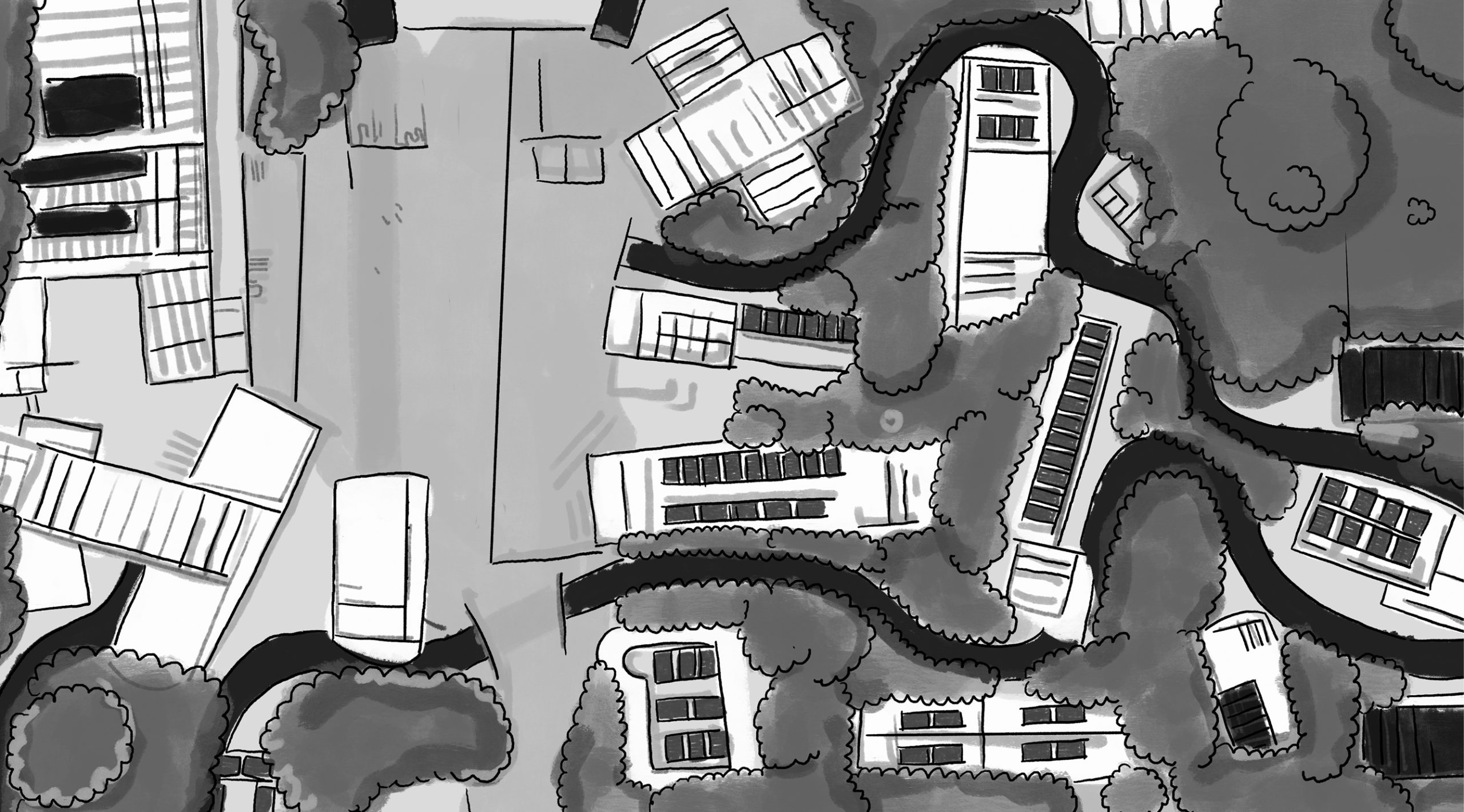
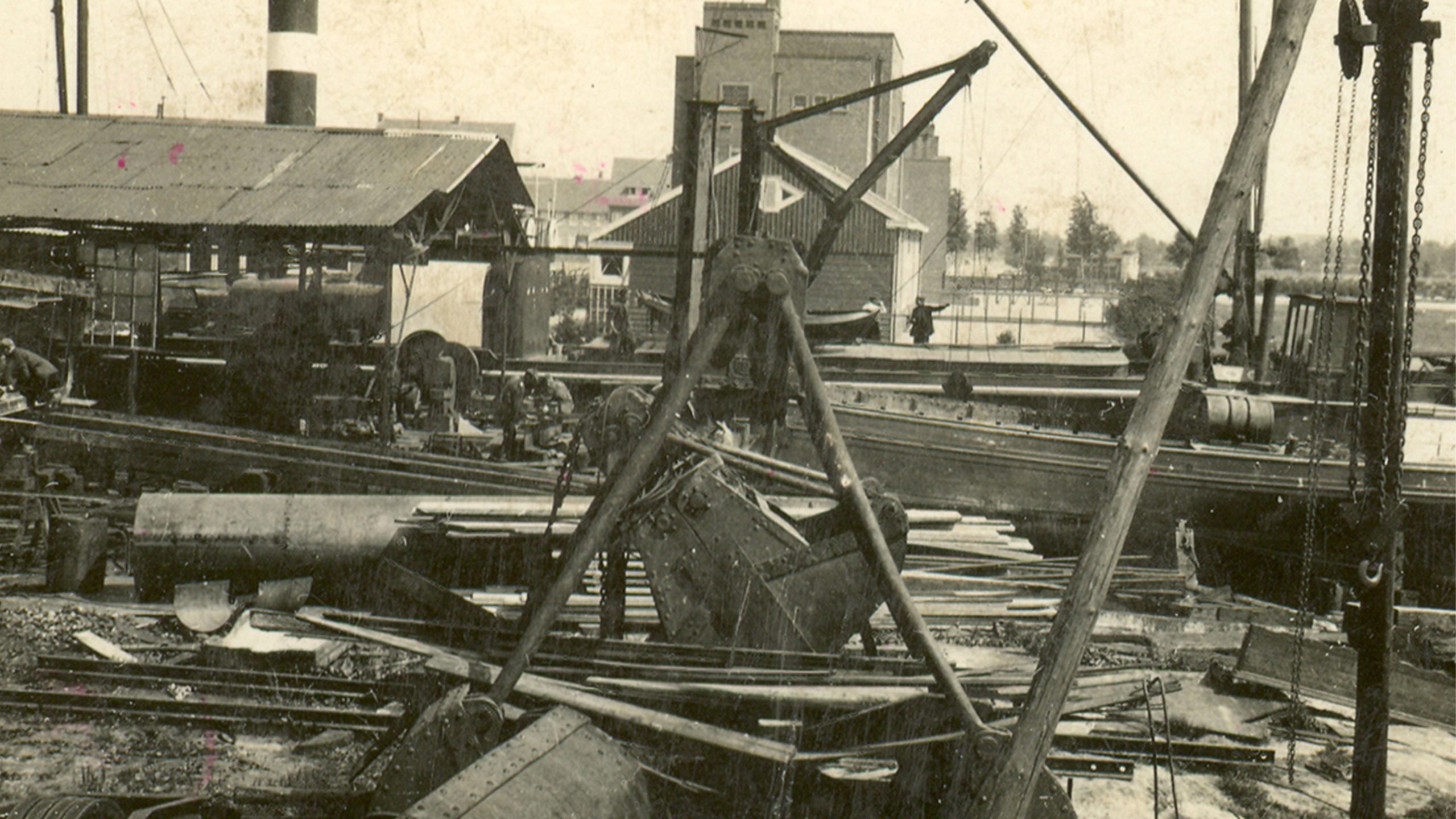
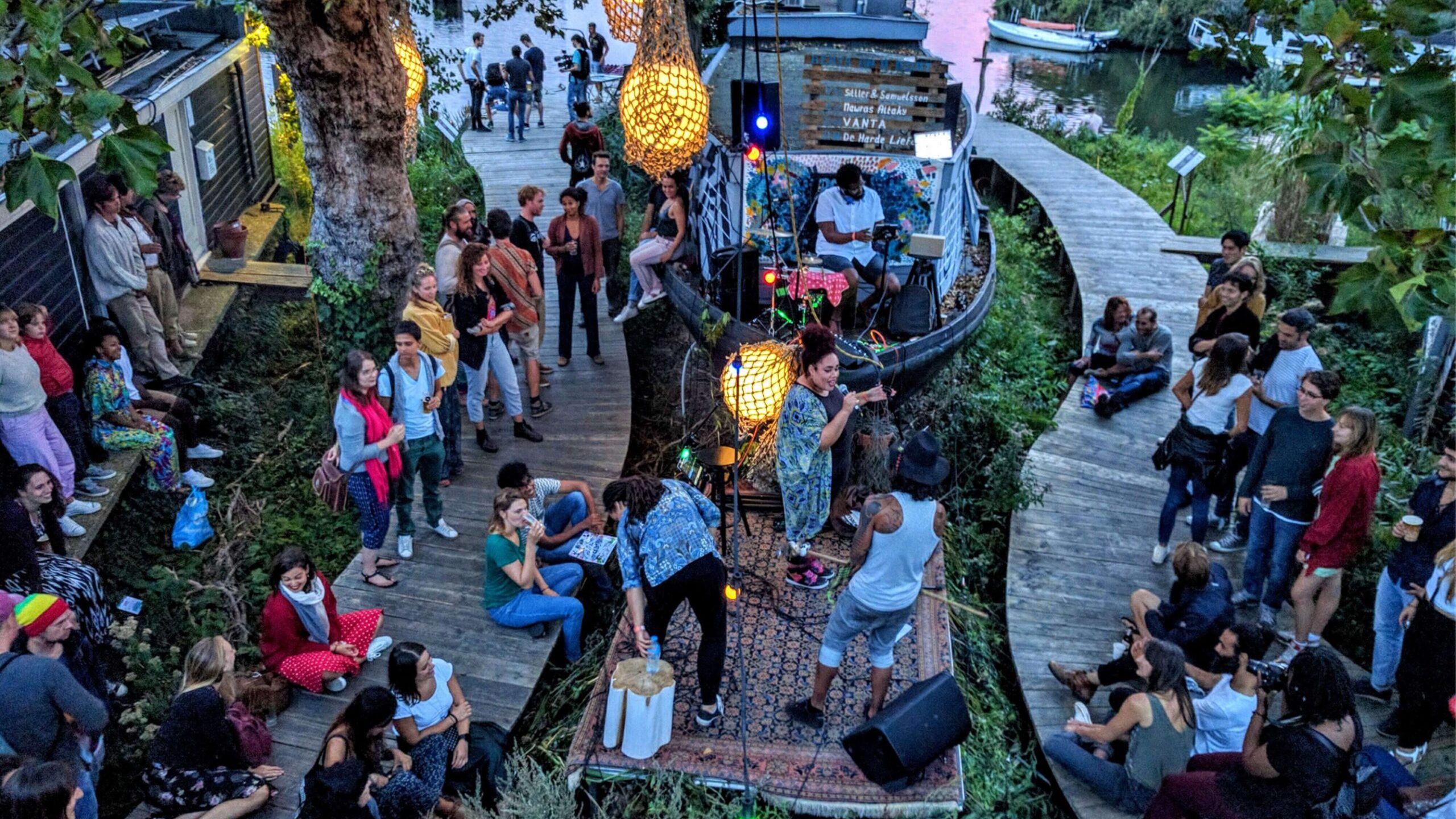
Established on a former industrial shipyard in Amsterdam North, De Ceuvel emerged after a 2012 architectural tender secured a 10-year lease from the Municipality of Amsterdam. The site officially opened in 2014, transforming into Amsterdam’s first circular office park. A community-driven, creative ecosystem built from reclaimed houseboats that became studios, workspaces, a café, a cultural venue and even a floating bed & breakfast. What began as an urban experiment has evolved into a regenerative “Cleantech Playground,” driven by a mission to inspire a societal shift toward circular living, where art, culture and innovation intertwine.
Collaboration
Organisation of De Ceuvel operates as a non-profit cooperative association of tenants, governed by an elected board of volunteers who oversee relationships with tenants, partners, and municipal authorities. The site comprises various components including, De Broedplaats (studio units), Metabolic Lab, Asile Flottant (the floating hotel) and Café de Ceuvel. Each of these managed collaboratively by individuals or teams specialising in culture, design, sustainability, or hospitality. The Purifying Park, responsible for soil remediation, is maintained by landscape experts and community volunteers, reflecting De Ceuvel’s emphases on inclusion, stewardship and mutual care.
Responsible practice
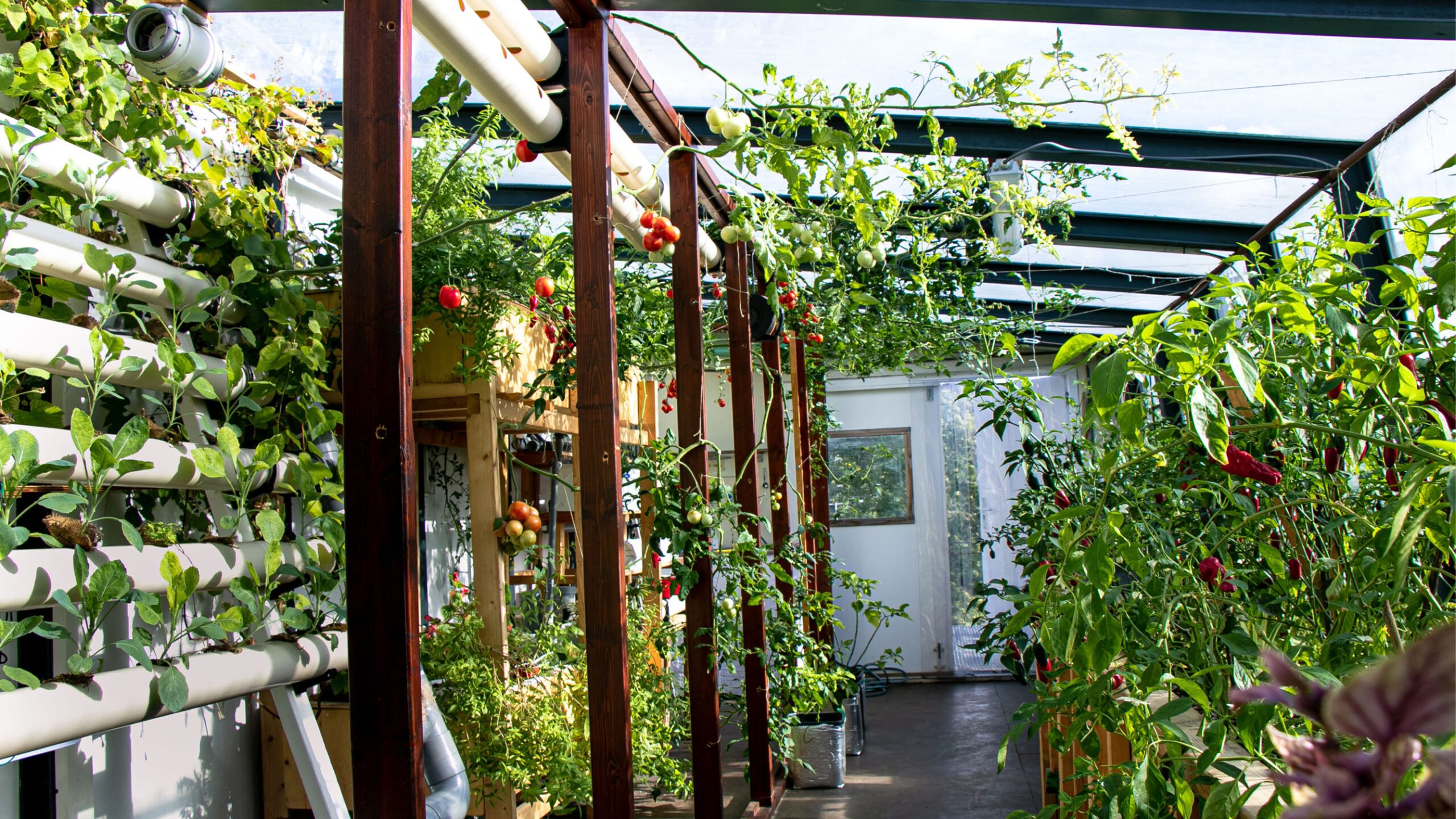
De Ceuvel showcases an array of innovative, sustainable systems. These are known as the Cleantech Playground, that close resource loops and reduce environmental impact. These include, compost toilets and struvite reactors that recycle nutrients into fertiliser. As well as helophyte filters for decentralised wastewater purification and heat pumps with air-to-air heat exchangers that reclaim over 60% of exhaust heat. In addition to the use of Phytoremediation in the “Purifying Park”. This uses specific plants to cleanse contaminated soil rather than displacing it, while solar energy systems generate around 36,000kWh annually, supplying self-sufficient electricity for the site.
Together, these solutions reflect De Ceuvel’s commitment to tackling environmental challenges at both technical and cultural levels.
De Ceuvel embeds circularity into everyday operations, including in energy, waste, and even social interactions. It features smart metering and a local energy-reward system involving “Jouliettes” (an early-stage local energy currency encouraging efficient energy use) and “Ceuveltje” tokens redeemable at the café. Composting, wormeries, aquaponics in the greenhouse and vermicomposting of café food waste all return resources to the ecosystem.
Community inspiration
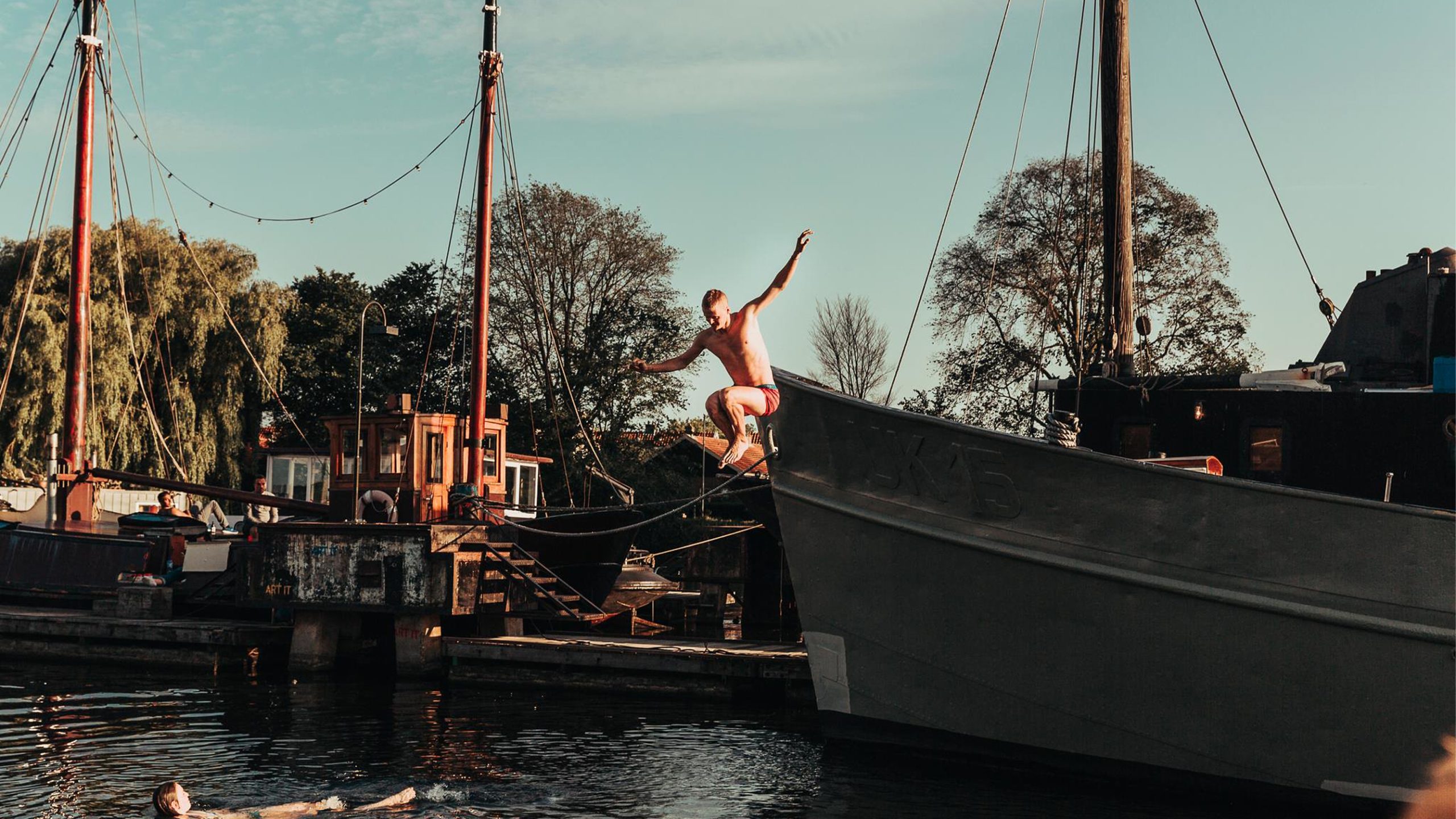
Beyond its eco-innovations, De Ceuvel acts as a living classroom and cultural hub. The vision underscores that transitioning to a circular economy is about shifting cultural mindsets. De Ceuvel achieves this through programming that includes sustainable workshops, lectures, arthouse films, music evenings and exhibitions. These features act as the perfect blend of culture with climate awareness and inclusion. They aim to “plant seeds in the hearts and minds” of visitors, fostering broader engagement with sustainability.
On the horizon
Originally anticipated as a decade-long experiment, De Ceuvel’s lease has been extended, currently until at least 31 January 2027. Further extensions being possible depending on municipal planning timelines. As it approaches its next evaluation threshold, De Ceuvel holds responsibility. Both to maintain its standards of regenerative stewardship and to pave the way for its successor. From a governance standpoint their continued transparency via annual reports, community meetings and cooperative leadership ensures their accountability.
The organisation’s responsibility encompasses safeguarding. De Ceuvel as a beacon of sustainable urban transition, that balances ecology, culture and community co-creation. Its legacy may well extend beyond 2027, as a reference model for how polluted spaces can be reclaimed as thriving, circular and inclusive urban laboratories.
Created by Jessica Marwood.
DISCLAIMER: We endeavour to always credit the correct original source of every image, however if you think a credit may be incorrect, please contact us at rb@hatchedlondon.com.


