
October 31st, 2025
Roetz Bikes a Dutch social enterprise founded in 2011, aims to “ride toward a better world” by merging environmental responsibility with social inclusion. Based in Amsterdam, Roetz builds its identity around circular design, sustainability, craftsmanship and community. The team works hard to restore discarded bicycles, build durable bikes, and create opportunities for people whom society might otherwise overlook.
At the heart of Roetz’s environmental responsibility is its circular production model. Each year in the Netherlands, more than one million bicycles are discarded. With many still with frames or components that are sound. Roetz collects “orphaned” bikes (those that ended up in bike depots, public transport fleets, or municipal collections) and rescues usable frames and front forks. The team carefully strips, inspects, treats and cleans these parts, adds a new multi-layer coating and integrates them into new bicycles.
For consumer bikes, fraction of parts/materials reused is currently around 30-40%. While for remanufactured fleet bikes, the reuse percentage of parts can reach 70-80%.
Roetz are also deeply invested in social responsibility. The “Roetz Fair Factory” is a social bicycle factory where many of the bikes are handmade in an environment that supports people with limited access to the labour market. Roetz often offers these employees apprenticeships or learn/work programs that provide training, coaching, and opportunities to grow into full bicycle mechanics.
Quality is another pillar in their identity. Even though frames are reused, Roetz holds to high standards. Only those frames that pass rigorous inspection are reused. They offer a guarantee on frames of 5 years in many cases. Asserting their confidence in durability.
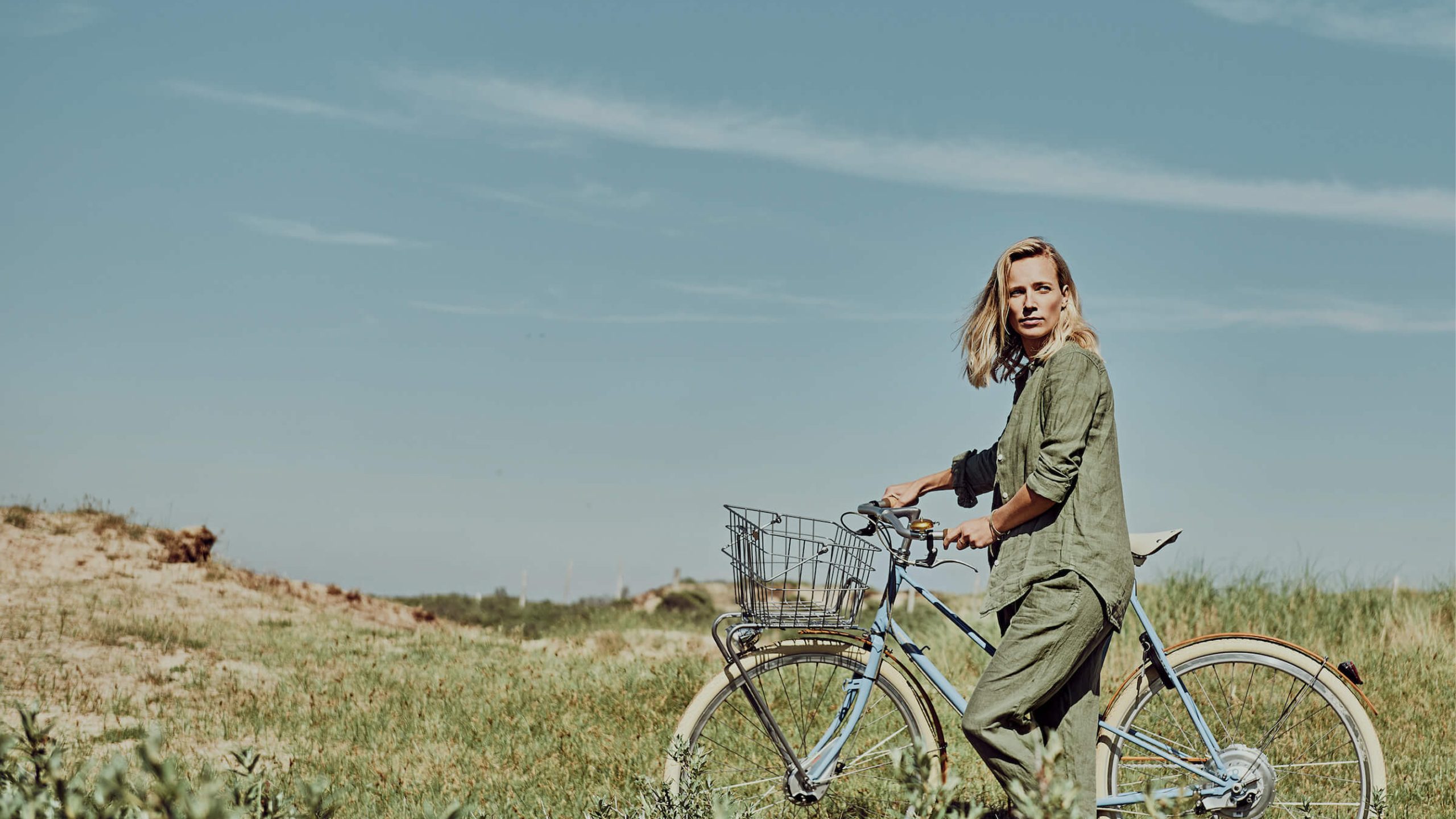
Another feature that helps define Roetz is its focus on customisation and craftsmanship. As they work with reclaimed frames, no two frames are exactly alike. Using an online configurator, customers can choose details such as frame color, accessories, mudguards, carriers, etc. This reinforces the idea that buying a Roetz is not just acquiring a bike, it’s adopting something with character and history. As well as a reduced environmental footprint.
Roetz also gives importance to local supply and local production, to reduce transport-related emissions, to keep tighter control over quality and to support local economies. They source many components from the Netherlands or neighbouring countries and keep much of the manufacturing in their own Amsterdam factory.
The final key feature to their responsible intuitives is their focus on transparency. For example “One Planet. One Bike” which draws attention to the hidden environmental cost of manufacturing new bikes and the value locked in discarded frames and parts. They publish impact reports, factsheets and social metrics. Including, how many bikes built, how many people in training, job placements and more.

Along with the difficulties they face, Roetz’s model has a number of distinct strengths:
- Their circular design approach transforms materials that would otherwise go to waste into something valuable.
- Their social enterprise structure ensures they’re not just pushing out products, but creating meaningful community and labour impact.
- Because they insist on durability and quality, people are more likely to keep, repair, and use their bikes for longer.
- The uniqueness/customisation adds emotional value, which may help people treasure the product more and discard it less.
However, there are challenges they must overcome to continue:
- Reuse and remanufacturing bring higher labor and processing costs compared with mass production of new frames.
- Achieving higher levels of circularity for e-bikes or for certain components (batteries, electronics, rubber, coatings) remains difficult.
- Some parts cannot be reused and new parts are needed, which may reduce circularity.
- Scalability is always a concern, as demand grows, ensuring consistency in quality, availability of good reclaimed frames, maintaining social/ethical standards and controlling environmental impact becomes harder.
- Customers’ willingness to pay premiums, or accept slower production times (since reuse means more inspection, adjustments) is a limitation.
Why do they keep getting back on that bike?
Roetz Bikes stands out in the crowded market because they don’t treat sustainability maintains an integral spoke into their identity. For them, being sustainable means acting on multiple fronts and their story resonates because of this.
Brands like Roetz offer a counter-narrative to the throw-away culture we live in today. Demonstrating that products can be beautiful, functional, repairable, personal and kind to both people and planet.
Created by Jessica Marwood.
DISCLAIMER: We endeavour to always credit the correct original source of every image, however if you think a credit may be incorrect, please contact us at rb@hatchedlondon.com.


